
#1 HackTheBox CJCA Path
I'm the first Cybersecurity to complete the CJCA Path in the whole world (globally), more than 315+ modules and sections, covering Defensive and Offensive role. Suite for a Cyber in general.

Certified Junior Cybersecurity Associate (CJCA)
CJCA, the sheer breadth of the path, with its 315+ modules and sections, provides a comprehensive foundation that goes far beyond what traditional courses offer.

Mainly it’s about mastering both the defensive and offensive sides of cyber, which is essential in today’s threat landscape.
I believe will redefine how the cybersecurity industry assesses foundational talent. Just recently, I became the first person globally to complete the entire Hack The Box Junior Cybersecurity Analyst CJCA path, all 315+ modules and sections, a journey that has profoundly shaped my understanding of the cyber landscape.
This isn't just about finishing a course; it's about a deep dive into the very core of cybersecurity, covering both the defensive and offensive facets of this dynamic field. From understanding network fundamentals and system administration to delving into more complex topics like incident response, threat hunting, and even penetration testing methodologies, the CJCA path is incredibly comprehensive.
The sheer breadth of topics covered within the CJCA path is its first major strength. Unlike many certifications that focus on a niche area, the CJCA provides a holistic view, ensuring that individuals possess a well-rounded skill set essential for various entry-level and even some mid-level cybersecurity roles. This broad foundation is crucial in an industry where threats constantly evolve and demand versatile professionals.
From HackTheBox:
To be eligible to start the examination process, one must have completed all modules of the "Junior Cybersecurity Analyst" job-role path 100% first. Each module in the path comes with its own hands-on skills assessment at the end that students must complete to prove their understanding of the presented topics. The answers to the skills assessment exercises are not provided. Evaluation takes place throughout the journey, not only during the examination!
HTB Certified Junior Cybersecurity Associate (HTB CJCA) candidates will be required to perform actual penetration testing and SIEM alert validation and analysis activities against a real-world enterprise network. HTB certifications are not based on and do not include multiple-choice questions!
HTB Certified Junior Cybersecurity Associate (HTB CJCA) candidates will be required to think outside the box and chain multiple vulnerabilities to achieve the exam's objectives. Like in real-world engagements, creativity, and in-depth knowledge will be necessary for a successful outcome. In addition to offensive techniques, candidates must also demonstrate defensive analysis skills by reviewing and validating SIEM alerts based on simulated attack telemetry—assessing the accuracy of detection rules and providing evidence-backed classifications. This dual focus ensures well-rounded, real-world readiness.
Successfully completing all cybersecurity assessment activities is not enough to obtain the HTB Certified Junior Cybersecurity Associate (HTB CJCA) certification. Candidates will also be required to assess the risk at which the tested infrastructure is exposed and compose a commercial-grade report as part of their assessment. HTB Certified Junior Cybersecurity Associate (HTB CJCA) candidates will have to prove they are market-ready and client-centric professionals.
The entire exam and certification process can be conducted through the candidate's browser, from start to finish. All penetration testing and SIEM alert validation and analysis activities can be performed via the provided and in-browser Pwnbox. There are no infrastructural or tool requirements.
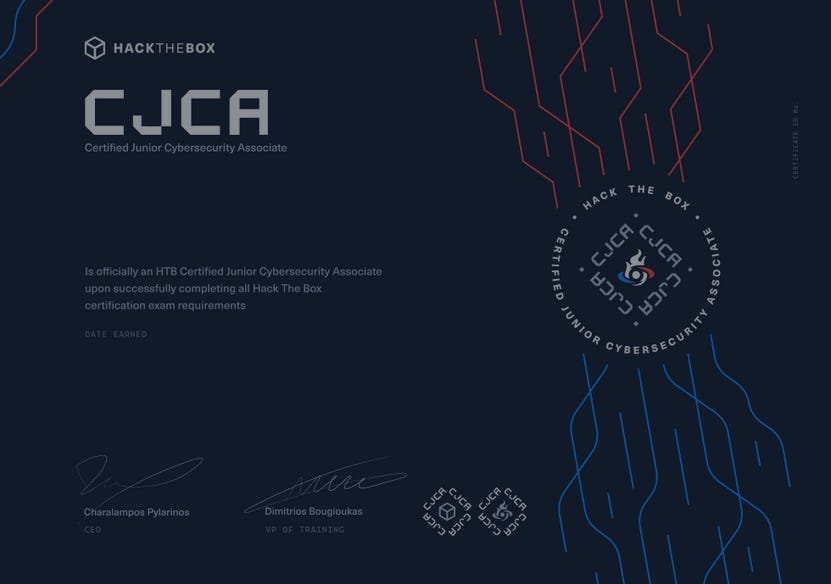
Knowledge domains:
Penetration testing processes and methodologies
Information gathering & reconnaissance techniques
Attacking Windows & Linux targets
Web application penetration testing
Manual & automated exploitation
Vulnerability scanning
Lateral Movement
Post-exploitation enumeration
Windows & Linux Privilege escalation
Vulnerability and Risk communication and reporting
Network Traffic Analysis
SOC Processes & Methodologies
Security Monitoring
Log Analysis
Intrusion Detection
SIEM-assisted Log Analysis (Elastic)
Beyond theoretical knowledge, the Hack The Box platform excels in its hands-on approach. The modules aren't just about reading; they involve interactive labs and real-world scenarios that force you to apply what you've learned. This practical experience is invaluable, bridging the gap between academic understanding and the actual demands of a cybersecurity position. You're not just memorizing concepts; you're actively doing.
For anyone looking to break into cybersecurity, or even those already in it seeking to solidify their foundational knowledge, the CJCA path acts as an unparalleled proving ground. It meticulously builds skills from the ground up, ensuring that by the end, you're not just familiar with terms, but truly capable of executing tasks.
The path is meticulously structured, starting with the absolute basics and progressively increasing in complexity. This pedagogical approach makes it accessible for newcomers while still providing significant depth for those with some prior exposure. It’s designed to transform individuals into competent junior analysts, ready to contribute meaningfully from day one.
One of the often-overlooked benefits is the development of a problem-solving mindset. Cybersecurity isn't just about knowing facts; it's about critical thinking and analytical skills. The challenges within the CJCA path encourage you to think like an attacker and a defender, fostering the adaptability necessary to counter sophisticated threats.
For employers, the completion of the CJCA path signals a candidate who possesses not only a strong theoretical grasp but also demonstrable practical skills. It showcases dedication, persistence, and a genuine passion for the field, all highly desirable traits in a cybersecurity professional. It’s a testament to sustained effort and a commitment to mastering the craft.
The integration of both defensive and offensive security concepts is a game-changer. A truly effective defender understands attacker methodologies, and a responsible attacker understands how systems are defended. The CJCA path fosters this dual perspective, creating well-rounded professionals who can anticipate and mitigate risks more effectively.
Furthermore, the continuous updates and relevance of the content are commendable. Hack The Box is known for staying current with industry trends and emerging threats, ensuring that the knowledge gained through the CJCA path remains pertinent and valuable in the rapidly evolving cybersecurity landscape.
The sense of accomplishment upon completing such a rigorous and extensive path is immense. It builds confidence and provides a tangible measure of one's capabilities, which can be a significant boost in job interviews and career progression. It’s more than just a credential; it’s proof of genuine mastery.
Why Take the CJCA Path?
The path covers both defensive and offensive cybersecurity, offering a truly holistic understanding of the field.
Unlike theoretical courses, you'll engage in numerous labs and real-world scenarios, directly applying concepts.
The curriculum is designed to equip you with skills directly applicable to junior cybersecurity analyst roles.
You'll develop critical thinking and analytical skills essential for identifying and resolving complex cyber issues.
It provides a strong entry point into the cybersecurity industry and a solid base for further specialization.
The path effectively closes the gap between academic knowledge and the practical demands of the job.
Successfully navigating over 315 modules instills a profound sense of accomplishment and competence.
Completion allows you to showcase tangible abilities to potential employers, not just theoretical understanding.
Hack The Box consistently updates its content, ensuring you learn about the latest tools, techniques, and threats.
While comprehensive, the structured progression makes it suitable for beginners and those looking to solidify foundational knowledge.
What You Will Learn in the CJCA Path:
Deep understanding of network protocols (TCP/IP), topology, and communication.
Proficiency in Windows and Linux operating systems, including command-line interfaces.
Core principles of confidentiality, integrity, availability (CIA triad), risk management, and security policies.
How to identify, analyze, and report security weaknesses in systems and applications.
Introduction to different types of malware and fundamental techniques for analyzing malicious code.
Steps involved in detecting, analyzing, containing, eradicating, and recovering from security incidents.
Techniques for collecting, preserving, and analyzing digital evidence.
Interpreting security logs from various sources to detect anomalous activities and threats.
Understanding how to use and contribute to threat intelligence to proactively defend systems.
Basic methodologies and tools used in ethical hacking to simulate attacks.
While I've completed the path, the impending certification will further solidify this achievement. Having a formal certification linked to such a comprehensive training program will undoubtedly serve as a powerful differentiator in a competitive job market, offering verifiable proof of expertise.
In a world where cybersecurity threats are escalating, the demand for skilled professionals is higher than ever. The CJCA path, with its emphasis on practical, hands-on learning across a vast array of topics, directly addresses this industry need by producing well-prepared and capable individuals.
One of the most valuable aspects of the CJCA path is its balance between theory and hands-on labs. Every module pushes you to apply concepts in practical scenarios, simulating real-world attacks, defenses, and investigations. This isn’t passive learning; it’s active skill-building that prepares you to handle incidents, analyze logs, and think like both a blue teamer and a red teamer. The hybrid analyst badge is proof that this path forges both skillsets simultaneously.
Completing the CJCA path is not just a personal achievement, but a demonstration of commitment and resilience. The path’s structure ensures that you don’t just dabble in topics you immerse yourself in network, application, and system security, as well as threat intelligence, vulnerability management, and incident response. This level of coverage means you come out truly “cyber ready,” not just exam-ready.
The industry values practitioners who can hit the ground running, and the CJCA path is designed precisely with that in mind. By completing hundreds of practical labs, you prove your ability to troubleshoot, problem-solve, and adapt skills that are critical for any cybersecurity role. The dynamic, ever-changing modules mean you’re always learning the latest techniques and best practices, not stale theory.

Another huge advantage is the community and recognition that comes with this achievement. Hack The Box is well respected worldwide, and being the first to complete this path sets a benchmark for others. It shows employers and peers that you’re dedicated, innovative, and unafraid of a challenge. The path completion and badge are evidence of your initiative and determination.
What makes the CJCA path stand out compared to other learning platforms is its real-world relevance. Each section is crafted with input from industry professionals, ensuring that what you learn is directly applicable to SOC environments, pentesting engagements, and general cyber defense. It's not just about passing a test it’s about being able to deliver results in the field.
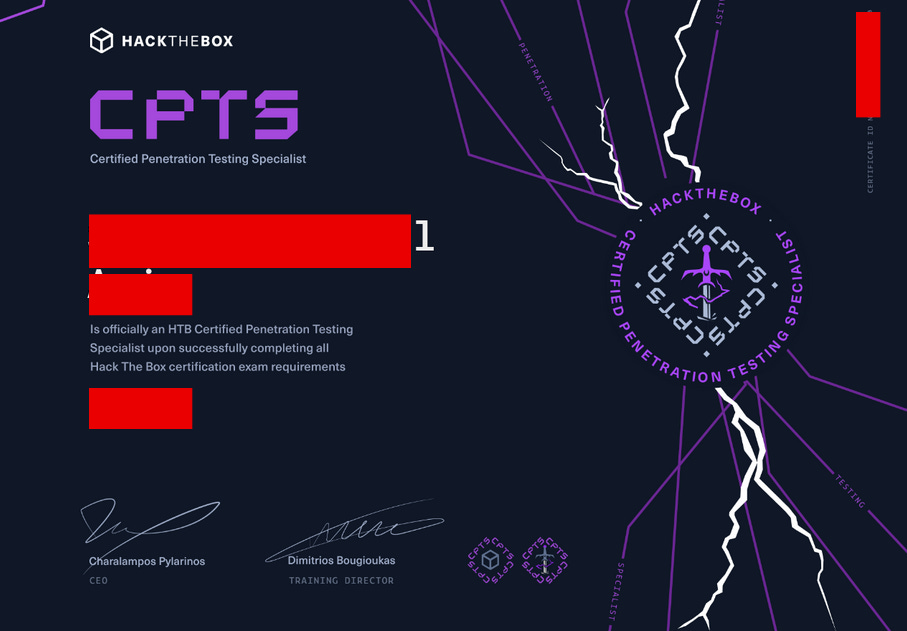
For anyone wondering if the path is “worth it,” I can say without hesitation that it is. The skills I’ve gained have already made me more effective, versatile, and confident as a cybersecurity professional. The structured progression ensures you don’t have knowledge gaps, and the gamified, achievement-driven environment keeps you motivated from start to finish. However!….. again, this title has “Junior“ in it, so I would only suggesting this for anyone who haven’t had role path like Red Teamer, or Blue Teamer, I would still suggest CPTS is greater in a way of proofing ground.
Oh yeah, the price also…. not gonna lie, this CJCA is a lot more affordable than the rest of the HackTheBox credentials and Certificate….. so it’s back up to you, for anyone serious about a career in cybersecurity, or for organizations seeking to upskill their teams, the Hack The Box Junior Cybersecurity Analyst path and its certification are not just a recommendation; they are, in my humble opinion, rapidly becoming the gold standard for foundational cybersecurity education. It's an investment in skill, knowledge, and a future-proof career.
Happy Hacking!